
The Four Words That Changed Everything - with Joe Tuia'ana
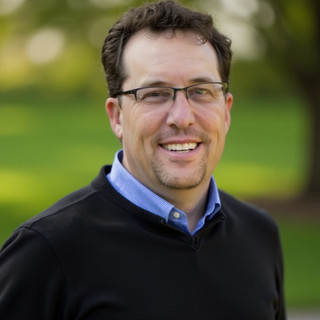

A few weeks ago I came across a story in the Deseret News in Salt Lake that I couldn't shake.
A man named Joe Tuia'ana was on his way to a basketball game. He had double pneumonia. He was two weeks sober. And on a route he'd driven a hundred times, he came across a man in crisis on a highway overpass.
Joe pulled over. Said a quick prayer. Climbed up.
He told me he didn't check any boxes to be of help to anyone at that moment, including himself. But he held his arms open and said the only words that came to him.
I love you, bro.
The man came down.
What Happened Next
After Joe got that man safely off the overpass, the two of them just sat together on the sidewalk. No big speech. No fixing. They sat and cried.
Later, the man connected with Joe through Facebook Messenger. His first words: 'Thank you for saving my life. I'm sorry I made you late for the basketball game.'
I laughed when Joe told me that. And then I sat with it for a second. Because that's exactly what a man in that position would say. Not 'you saved me.' An apology for the inconvenience. That's us.
When the man came to Joe's house, he talked. His wife was leaving. He might not see his son. Someone had told him he'd never make enough money. Joe told me on the podcast that those three things, marriage, fatherhood, and income, are the consistent pattern he sees in men with suicidal ideation. Not a long mental health history. Just two or three things hitting at once with no way to process them.
The Data Joe Is Collecting
After that day on the overpass, Joe started the I Love You Bro Project. He told me it's the only evidence-based men's mental health organization in the country. Fifteen weekly support groups across Utah. When a man shows up, he scans a QR code and fills out a humanized clinical intake form with questions about what he's feeling, what's happening at home and at work.
Thousands of responses. Real data from real men.
Here's the data point that sat with me longest. Joe asked men which statements they most need to hear more often from friends and family. There were fifteen options. All good things. 'I love you.' 'I'm here for you.' 'You're a strong man.'
The top answer, selected by 50% of men: 'I appreciate how hard you work.'
Number two: 'I'm proud of you.'
And the two that landed at the absolute bottom? 'Reach out if you need something.' And 'Let me know if I can ever help.'
Those are the two things we say all the time. And men aren't moved by either of them. Because men don't reach out. Joe said it directly: 'I'll go internally and have this thing boil to a point.' I know that's true because I've done it myself.
What Presence Actually Looks Like
One thing Joe said that I keep coming back to was about what happened in those ninety seconds after he got the man off the ledge. The community started gathering. And the first guy who came up said, 'Why would you want to do this?' Meant well. Wrong thing entirely.
The second person, a woman, said, 'Do you have kids? What would your kids think about this?'
Joe called those 'programmed responses.' We've learned to say certain things, and we say them. But they're not what men in crisis need. What Aaron needed, Joe said, was someone to picture him on his own overpass and talk to him accordingly. Not to fix it. To be in it with him.
That's not a small thing. A lot of us think being present means showing up. Joe is saying it means putting yourself emotionally in the same place the other person is. That's harder. And it's the thing that works.
Why Weekly Matters
I asked Joe how he landed on weekly meetings instead of monthly or bi-weekly. His answer was one word: failure.
He tried other cadences. They didn't work for Aaron. Every other Tuesday. Every third Wednesday of the month. None of it was consistent enough. So he made it weekly, asked Aaron if that would help, and it did. Then other men started showing up.
The fourth most common thing men say they love about Joe's groups is 'weekly structured and consistent.' Fourth. Out of everything. Turns out men don't just want a place to talk. They want to know it's going to be there.
The Thing Joe Said at the End
We always close every episode with one question: what's one thing a man can do today to build deeper connections with those around him?
Joe said: stop trying to heal alone. Get off your device. Get outside with someone. If you're isolated, find one person and do one thing with them. Walk. Bowl. Go to the gym. It doesn't matter what it is. Just get present with somebody.
His groups don't stream anything. Every man has to show up in person. That's by design. Connection requires presence. You can't outsource it to a screen.
I actually went to one of the I Love You Bro groups up in Providence, Utah a few weeks before we recorded. Good group. Real men talking about real things. If there's one in your area, it's worth checking out.
This episode is one I'll be sending to people for a while. Joe doesn't have a polished pitch. He has data, a story he didn't plan for, and fifteen groups of men who show up every week because someone decided not to drive past that overpass.
📩 Get The One Thing — a weekly note from Mark every time a new episode drops.
🎙️ KneeToKnee — connection that compounds.
[INSERT LI


Comments