
The Unexpected Truth He Discovered After Leaving the Military - with Ryan Reichert
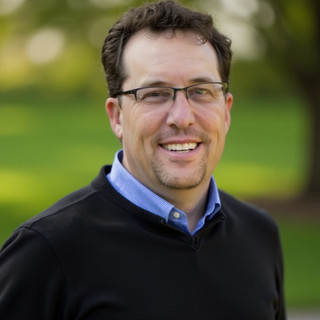

Ryan Reichert looked the part. Lieutenant Colonel. Fortune 500 job. Multi-six-figure salary. From the outside, the transition out of the military looked like a success story in progress.
Inside, he was the loneliest he'd ever been.
That's the thing about identity crises. They don't announce themselves. They just quietly take pieces of you until one day you look in the mirror and don't recognize who's looking back.
Ryan and I talked about this on a Saturday morning, both of us fighting the urge to go back to bed, and what came out of that conversation was one of the more honest exchanges I've had in a while. Not because Ryan has everything figured out, but because he's willing to name what went wrong and show the work it took to get somewhere better.
When Ryan left the military in 2022, he lost more than a rank. He lost his foxhole. The brotherhood, the shared mission, the men beside him who knew what was at stake. Corporate America handed him a title but nothing to fight for alongside anyone else. And without that, he self-isolated. Ran from the hard stuff. Watched the things he'd built in his personal life start to come apart.
He talks about it without self-pity, which I appreciated. Not because self-pity would be wrong, but because Ryan's already past that phase. He's doing the work now.
The groups he's part of tell the whole story. He teaches junior high boys at Eagle Brook Church in Minnesota. He's a battle buddy in a veterans court program, sitting in the foxhole with guys going through something he once lived adjacent to. He's an advisor for Marcus, an AI tool built specifically to help men talk through where they're at. And Bravo Zulu House, the first all-veteran sober house in the nation, is close to his heart for obvious reasons.
Ryan is candid about the addiction, the PTSD, the things that filled the hole when brotherhood wasn't there. He's equally candid about what actually filled it eventually. Not medication. Not status. Service. Community. Faith. The willingness to say to another man, I'm not doing great today, can we talk.
He has a framework now called Our Protector Development, built on the idea of turning pain into purpose. He co-hosts a podcast, he's written books, he's doing the thing. But the piece that stuck with me most was simpler than any of that.
Ryan did a TEDx talk in Duluth in February. Six steps to kindness. It starts with making eye contact and smiling. That's step one. The rest of it is please, thank you, excuse me, I'm sorry, and then repeat all day long.
He told me that when he left the grocery store the other night, head down, kicking rocks over whatever was bothering him, a stranger looked up, smiled, and asked how his day was going. And it snapped him back. Present. Grounded. Reminded that life was better than the story he was telling himself in that moment.
That's the thing about a smile. It doesn't fix the deep stuff. But it keeps you in the game long enough for the deep stuff to get worked on.
I told the story about the cowboy at the gas station in Idaho, the guy who told me he'd given up hope years ago and that life got easier after that. Ryan's answer to that guy, without knowing him, is just to keep smiling at the next person. Keep going. Let the butterfly effect work.
The kindest version of leadership doesn't announce itself either. It just shows up, makes eye contact, and refuses to let the people around it go it alone.
That's what Ryan is building. And it was worth getting up early on a Saturday for.
Listen to the full conversation: https://youtu.be/bK-LmEWAJ2U


Comments